
Helping a circular asset platform stay strategically focused as it scaled
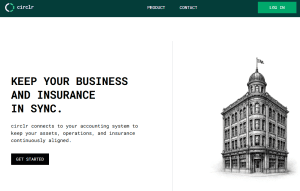
One of the recurring challenges in early-stage product work is not a lack of ambition.
It is usually the opposite.
There are too many good ideas, too many possible features, and too much pressure to prove value quickly.
That was part of the tension with Circlr.io: a digital platform built to transform how organisations track, manage and value assets, not only in financial terms, but in environmental ones too. It is an ambitious proposition, and an important one. If we want more sustainable, resilient systems, we need better ways to understand what assets exist, how they are being used, and what value can be retained for longer.
Circlr had a clear long-term vision: to help manage 1,000,000,000 assets over the next decade. But like many early-stage ventures, they also needed to make sharp decisions in the short term. Revenue needed to move. The offer needed to resonate with accounting partners. And the product needed to become compelling enough to stand out in a crowded market without disappearing into expensive complexity.
The challenge
The practical risk was feature creep.
That phrase gets used often in tech, but in reality it means something quite human: teams try to respond to every possibility at once. A promising product can slowly become harder to explain, harder to use and more expensive to build.
On paper, more features can look like more value.
In practice, they often create friction.
For a platform like Circlr, that mattered. Their mission sits within a wider sustainability and local resilience story. If the platform was going to help organisations make better decisions about asset life, value and environmental impact, then the experience itself needed to be clear, engaging and grounded in the behaviours that actually drive adoption.
The approach
My role was to work alongside the team through a flexible mini-retainer, offering targeted advisory and consultancy support suited to the realities of an early-stage business.
This was not about dropping in a generic gamification layer.
It was about using gamification and behavioural design as a strategic lens: looking under the bonnet of the product, the proposition and the team’s priorities to see what would genuinely help people engage.
The work included:
- becoming an active user of the demo product to experience the platform from the inside;
- reviewing wireframes, experiments and roadmap decisions through a behavioural design lens;
- breaking down product ideas into their most essential components so the team could separate what was useful from what was merely interesting;
- helping refine KPIs so progress could be judged more clearly;
- holding regular weekly check-ins to create a rhythm of reflection, challenge and decision-making.
In simple terms, the work was about creating better judgement.
Gamification theory can be useful here, but only when translated into practice. At its best, it helps teams understand what makes progress visible, what keeps people engaged, and where motivation gets lost. That is especially valuable when a product is trying to shift behaviour rather than simply add more functionality.
What changed
The most useful outcome was greater strategic focus.
Instead of chasing every possible feature, the team had a clearer way to assess what really mattered. The product became easier to think about in terms of user engagement, business value and delivery discipline.
That also meant the weekly conversations served a second purpose: accountability. In fast-moving companies, that kind of structured reflection can stop costly drift before it takes hold.
According to Tom Ogden, Founder and CEO of Circlr, one of the most valuable aspects of the work was the combination of fresh perspective and practical clarity. He described the support as “clinical” in its effort to first understand the product and then provide immediate value. He also highlighted the benefit of having someone break the product down into its most basic parts, help hone KPIs, and act as a sounding board across development as the team navigated the risk of feature creep.
Why this matters
What interested me about Circlr was not just the product challenge.
It was the wider implication.
If we are serious about sustainability and local resilience, we need digital tools that help organisations make better long-term decisions about the assets they already have. That requires more than software. It requires careful choices about motivation, clarity and engagement.
This is where gamification and behavioural design can do useful work.
Not by adding superficial rewards, but by helping teams design for attention, momentum and better decisions.
With Circlr, the task was to create enough strategic clarity that the platform could keep moving towards its mission without being pulled off course by the noise that so often surrounds early-stage growth.
That is often the real work.
Not making something louder.
Making it clearer, more usable and more capable of supporting better behaviour over time.