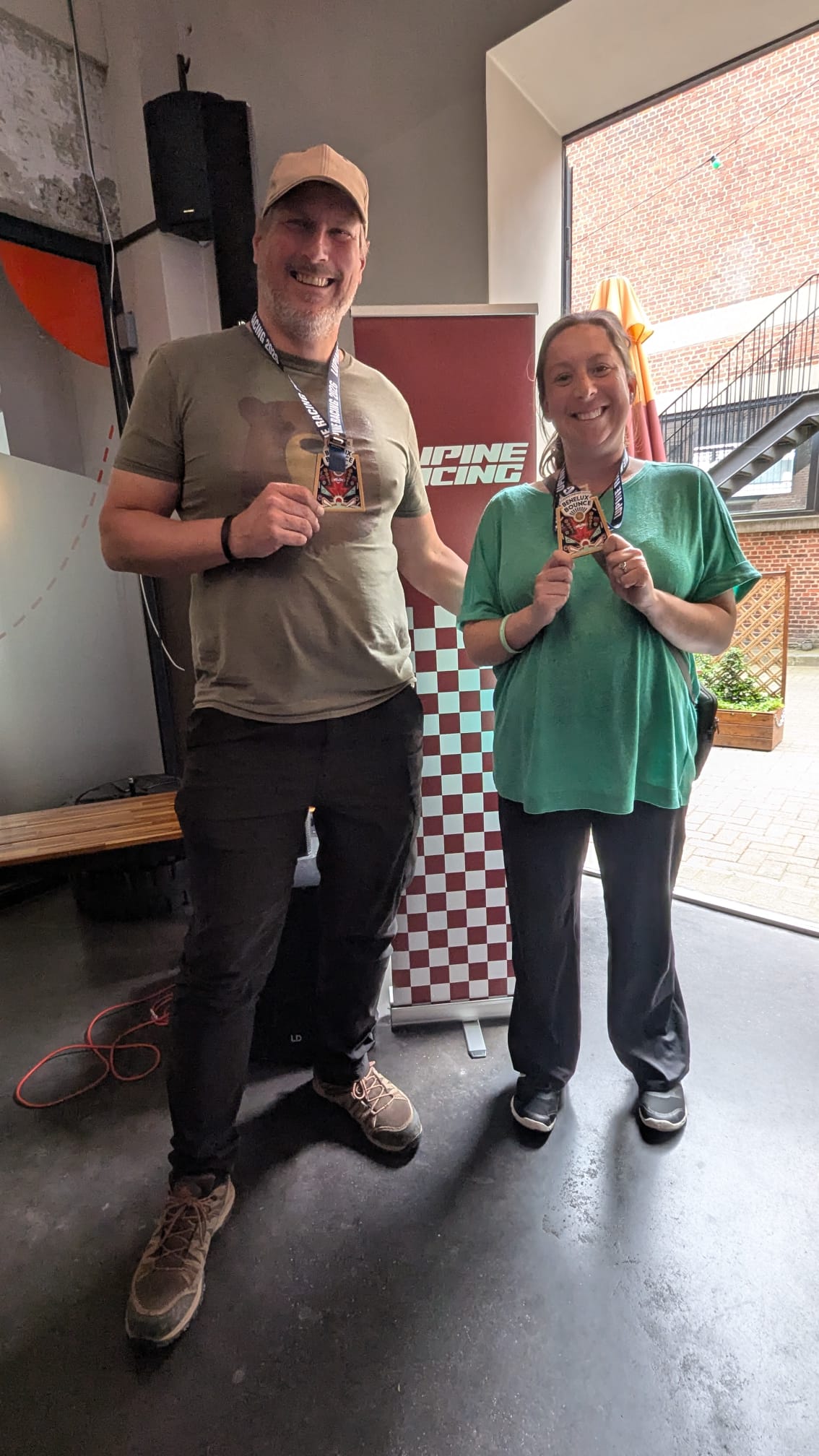
The Benelux Bounce is a treasure hunt across 3 countries in 56 hours. You can only use public transport, and you win by visiting as many checkpoints as possible. All your points are lost if you don’t make it to the finish line on time…
I spend my working life peering under the bonnet of human motivation. But standing at the mass start of the Benelux Bounce, none of that was uppermost in my mind.
What I remember is a moment of hesitation.
Out of roughly seventy racers, the vast majority surged off to the right. Only four of us, including my teammate (Jes) and I, went left.
In that instant, doubt hits you physically. You clock the movement of the crowd, feel the tug of social proof, and think: What do they know that I don’t?
There’s no spreadsheet or framework that quiets that voice. You just commit and keep walking.
That’s the nature of a truly wicked problem. There is no single right answer, there’s only choices you own, and consequences you carry. This is my attempt to make sense of the Benelux Bounce, not as a clean case study, but as something lived: messy, human, and occasionally uncomfortable.
The Left Turn and the Weight of Choice
It felt reckless, to be honest. Not heroic, just exposed. Four people breaking away from sixty‑six, with no evidence we were smarter than the crowd. We turned to the other team (the ‘Seated Rivalry’) and voiced our doubts and there may have been a nervous laugh or two.
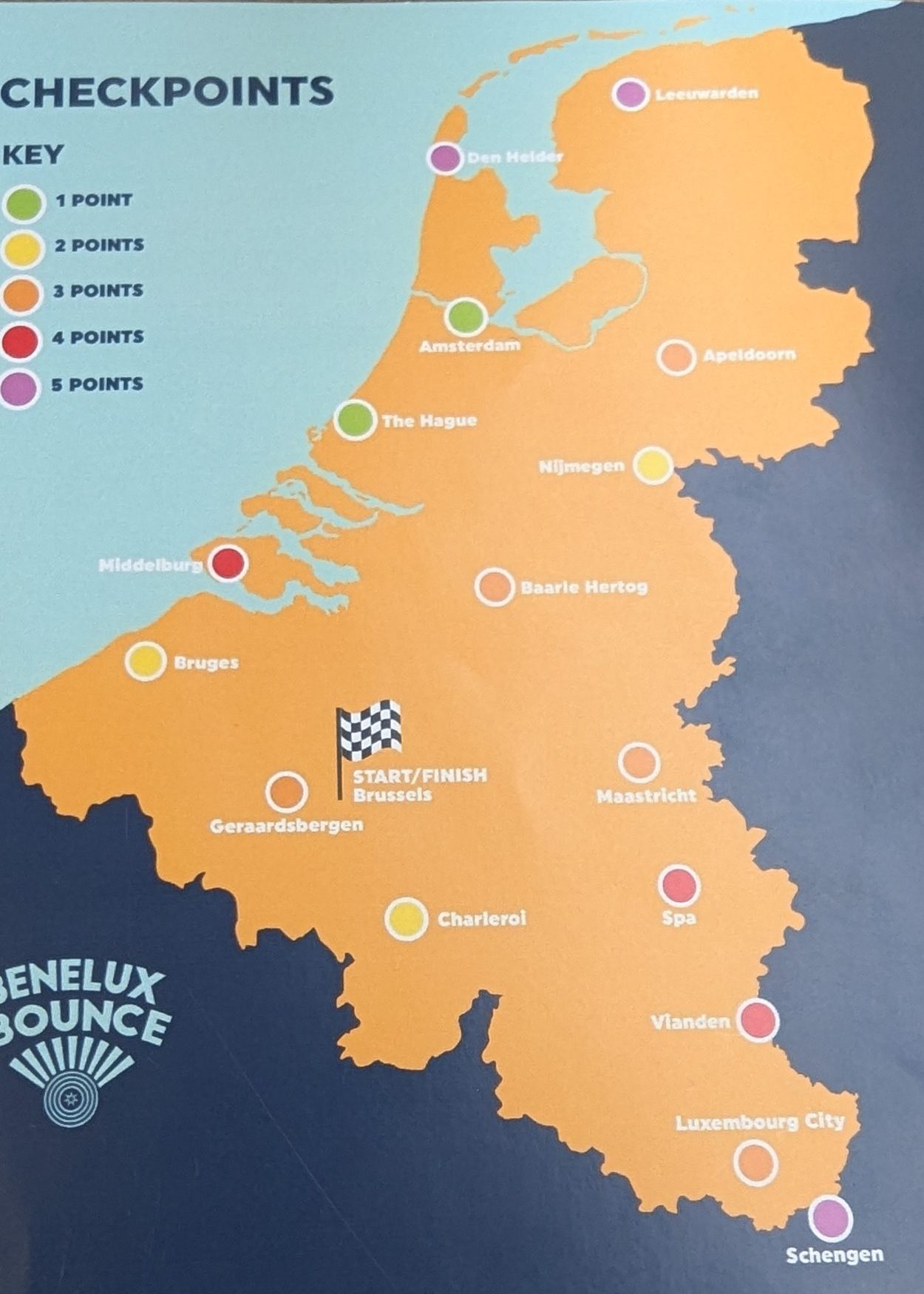
The event is designed this way, of course. The rules are minimal: visit at least three countries and score a minimum of ten points to complete the race. To win though, there are sixteen checkpoints available and far more points than a single weekend can comfortably hold.. Beyond that, you’re on your own. No prescribed route. No optimal path. A menu of possible “side quests” that range from practical to slightly absurd—finding a particular fortification, a chip shop, yourself photographed on a bridge.
At the time, it didn’t feel like a lesson in anything. It just felt like responsibility. Every choice narrowed the field of what was possible next.
I’d later recognise this as autonomy in the Self‑Determination Theory sense. The need to feel that you are the author of your own actions. But in the moment, theory is useless. What you feel instead is accountability. If this goes wrong, it’s on you.
Luxembourg, or: When Competence Gets Tested for Real
It’s easy to feel capable when systems behave. It’s much harder when they fall apart.
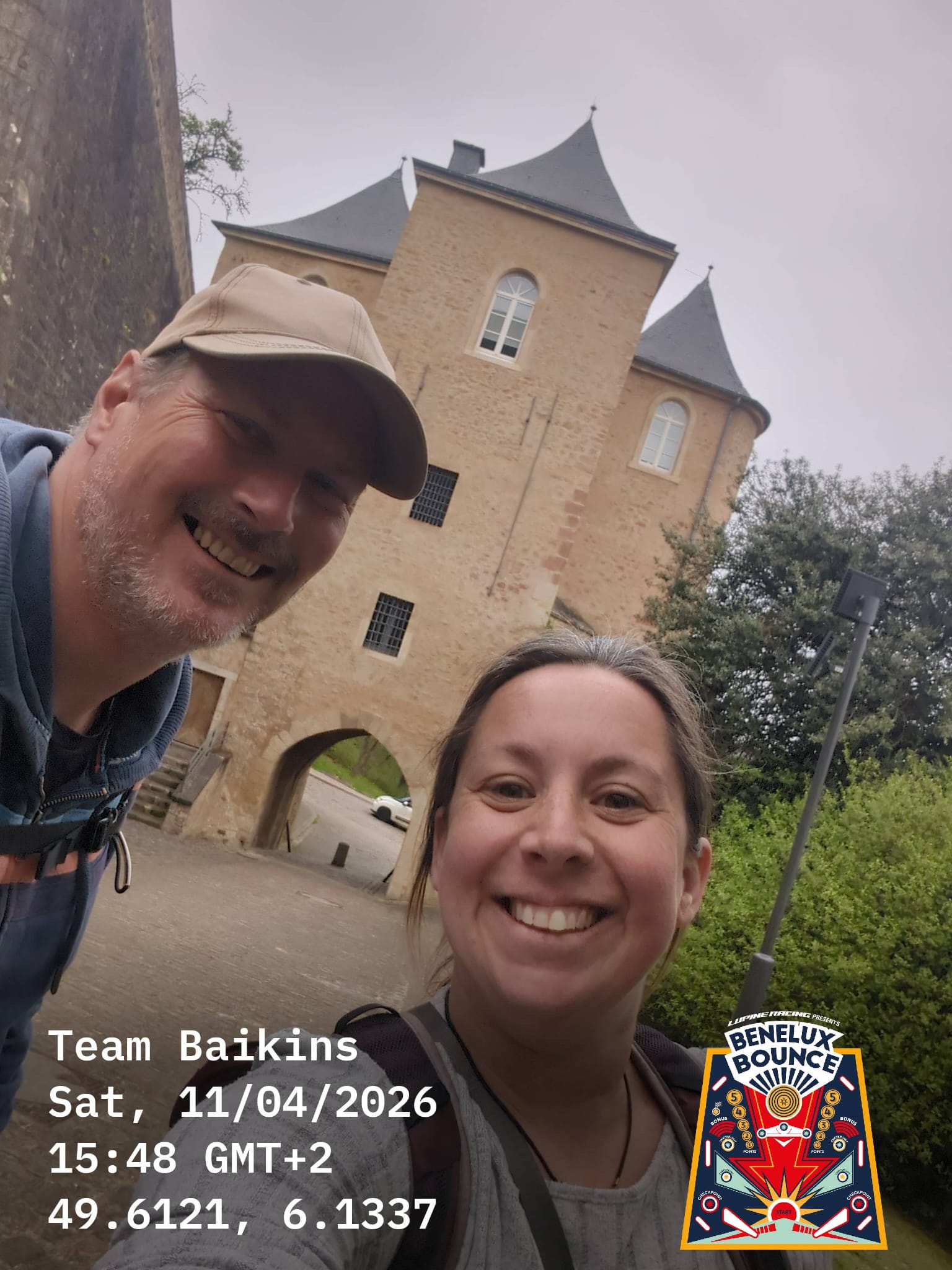
Luxembourg (with its marvelous free public transport system) was supposed to be straightforward. Instead, every train in the country had been cancelled all weekend.
Though there were rail‑replacement buses, there weren’t enough of them. People tried to force their way past the queues and on to the buses. It was chaotic and a bit scary, with the bus driver constantly having to repeat his safety instructions.
The buses were so full, with people standing in the aisles, that drivers couldn’t use the highway and were forced into using the longer scenic route. Progress felt slow. We were pretty sure we had competitors in one of the other buses and hoped we wouldn’t get too far behind. It turned out there were two other teams squeezed onto those buses and we all reached the Luxembourg checkpoint within a few minutes of each other and claimed the bonus point.
That small surge of relief, the quiet yes when a risky call works out, that’s what competence feels like when it’s earned rather than assumed. It isn’t triumph. It’s friction, followed by momentum.
Strategy Is What You Say in the Morning. Tactics Are What You Do at Night.
We’d started the weekend with a sensible, defensible strategy: At the end of the day we’d head from Luxembourg to Liège, then get a proper night’s sleep.
Then the leaderboard updated.
Maastricht was still unclaimed. Maastricht was very close to Liège. Another team was on the same train with us. What if they were thinking the same thing?
We hesitated. Briefly.
We abandoned the plan and caught the last train from Liège with no accommodation booked. It was already late enough to make this a bad idea.
Our first hotel: full.
Our second: full.
By the third, the price had climbed well beyond what we’d budgeted. We took the room anyway. We grabbed a win at the checkpoint then we collapsed exhausted but ecstatic at our unexpected win.
In gamification circles, there’s a concept called stewardship—the idea that you are the custodian of your own outcomes. That night in Maastricht remains the most honest version of that idea I’ve encountered. Nobody forced that gamble. Nobody cushioned the cost.
It worked. And it easily might not have.
You Don’t Race Alone, Even When You’re Physically Apart
Despite participants arriving from across Europe, and even the West Coast of the United States, the Bounce never felt solitary.
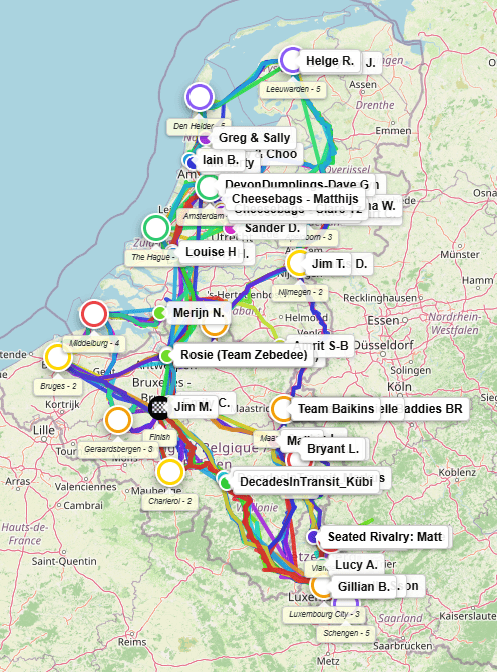
The WhatsApp group was a constant low‑level buzz: photos, rumours, train and bus breakdowns, guessing at other people’s strategies and all this right through the night. The Discord group did its work beforehand, but during the race it was the WhatsApp updates, the live location maps and physical markers that mattered: t-shirts, wristbands, stickers, bag tags.
From the map you’d suspect other racers were nearby, and with the wristbands and tags you could spot another racer in a crowded station easily. At times, it felt like the same pair were shadowing us for most of the 56 hours! We ended up sharing the last train back to the finish line with 6 other racers we found this way, and serendipitously we returned from ‘the left route’ with Seated Rivalry (who kindly shared a coffee shop recommendation that was needed to keep us going to the very end) to finish!
The challenges themselves quietly reinforced this sense of belonging. Being sent out to find local mustard or a historically specific beer forced us into conversations and local culture we wouldn’t otherwise have had. You’re not just glancing at a place; you’re experiencing it.
This is something I talk about often in my consultancy work, but it hits differently when you’re tired and slightly lost: the line between audience and participant is thinner than we think.
Points, Decay, and Why the System Holds Up
To keep players coming back to more races there also sits a carefully designed points structure built around Status, Access, and Stuff.
Status arrives through rolling league points: thirty-five for finishing, more for winning. But crucially, these points decay over three years. No permanent champions. No unassailable legends camping at the top of the board.
That fade matters. It keeps the door open to newer players.
Access comes through participation itself, the after‑party and awards ceremony, and a long‑term loyalty structure that rewards showing up, not just peaking once.
Stuff is the visible layer: medals, t‑shirts, stickers – each related to just one of the races. It certainly makes you want to collect them all.
It’s tempting to dismiss these mechanics as superficial. Standing in a station at 2am, they didn’t feel superficial at all. They felt like orientation markers—small signals that your suffering existed within something shared.
Bouncing Differently
When we booked our tickets to take part, we planned to compete for the win. However, for health reasons, we had to adjust our approach and strategy. Fewer high‑speed dashes. Different checkpoints. A version of the game that fit where we actually were, not where we wished we were.
Unexpectedly, we found bonus points precisely because we weren’t following the dominant pattern.
This is the quiet strength of well‑designed behavioural environments: they allow multiple ways through without pretending all journeys are equal.
Whether I’m lecturing at King’s College London or working with a health‑tech startup like Good Boost, the lesson I keep relearning is simple and inconvenient. Behaviour doesn’t change because systems are neat. It changes when structure leaves room for judgment.
I’m looking at future races and what I can’t decide is whether that left turn will feel easier now that I know exactly what it demands of me.